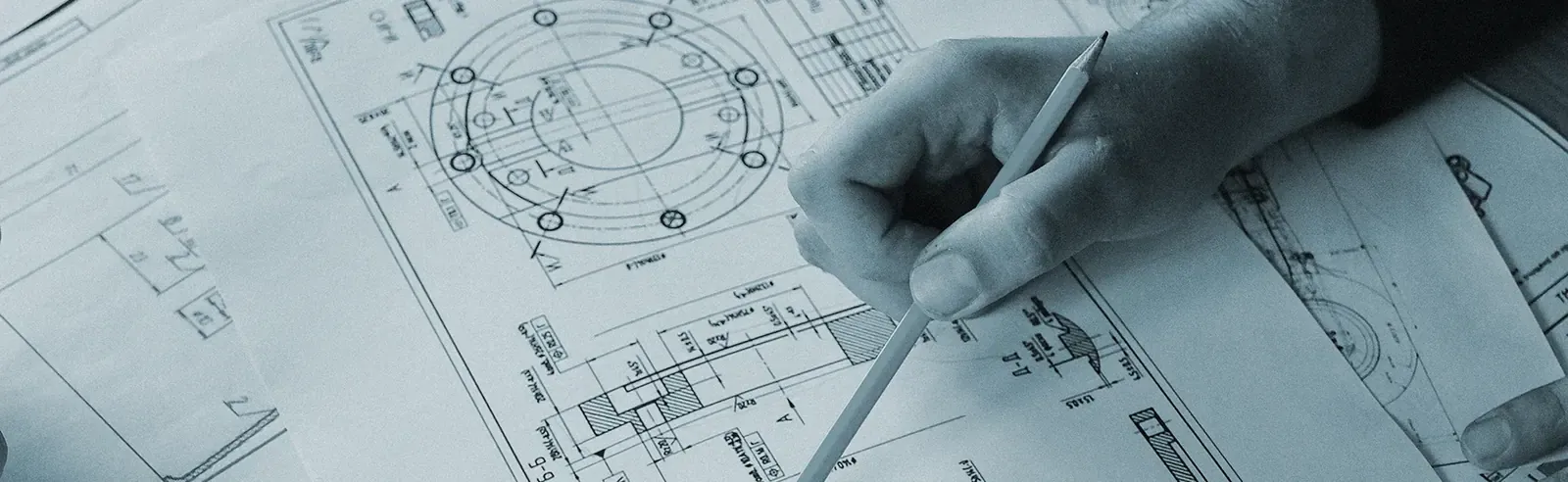


A construction site inside a working plant
Modernising an operating industrial site means running two projects at once: a construction project and a production activity that cannot wait. Every day of unplanned downtime has a direct cost for the operator, and sometimes for its entire supply chain. This is the demanding context in which FINC Solutions works, combining technical expertise with project management.
In this context, the question is not only “what needs renovating?” but “in what order, with what protections, and when?”. Production continuity becomes a design input, just like structural loads or energy targets.
The sites concerned often share the same symptoms: ageing structures, energy-hungry equipment, building services added over decades without an overall plan, and incomplete or outdated records.
Start with a combined assessment
The assessment shapes everything that follows. It goes beyond a condition survey of the buildings: it cross-references the state of the structure, energy consumption and the constraints of the production processes.
On the structural side, surveys and inspections assess visible defects, actual load-bearing capacity and any need for strengthening, especially when new equipment, heavier or generating vibration, is to be installed.
On the energy side, a breakdown of consumption by end use identifies priorities: heating or cooling, compressed air, lighting, motors, building envelope. On the process side, discussions with production teams reveal sensitive areas, quiet periods and the real room for manoeuvre.
- Structural condition and load-bearing capacity
- Energy balance by end use and by zone
- Mapping of flows: people, materials, vehicles, networks
- Site-specific hygiene, health, safety and environmental constraints
Phase the works zone by zone
Phasing is the heart of the method we apply at FINC. The site is divided into coherent work zones, each separated from production by partitions, dedicated access routes and clear access rules. The most disruptive operations are scheduled during periods of low activity: weekends, annual maintenance shutdowns, off-peak seasons.
Each switchover from an old installation to a new one is prepared as an operation in its own right, with a fallback scenario if a test is unsatisfactory. This preparation is what keeps outages to short, announced windows.
The phasing plan is not a fixed document. It is built with the operator, validated at each stage and adjusted to the site’s commercial commitments.
Strengthen the structure and modernise equipment
Structural work on an occupied site calls for suitable solutions: strengthening that can be installed piece by piece, techniques that limit dust and vibration, temporary propping designed to keep circulation routes open.
On the equipment side, replacing the most energy-intensive plant generally yields the fastest gains. It goes hand in hand with upgraded controls and metering, so that results can be measured and drift does not creep back.
The building envelope, including insulation, windows and roofing, can be addressed in the same programme. It reduces demand for the long term and improves working conditions.
Each new installation is tested before final commissioning: performance, safety devices and automation are checked in the operator’s presence. Maintenance teams are trained on new equipment before the switchover, not after.
Safety, coordination and communication
Contractors and production staff working side by side is the main source of risk. It is managed through a shared prevention plan, systematic safety inductions and daily coordination between the site team and operations.
Internal communication matters just as much. Keeping site staff informed of closed areas, planned outages and new walkways prevents incidents and helps people accept the works.
At the end of the project, handing over up-to-date records, including as-built drawings, manuals and maintenance plans, gives the site what it often lacked at the start: reliable knowledge of its own installations, useful for every future intervention.
Industrial sites in Canada, Morocco and Africa
Based in Canada and active in Morocco and elsewhere in Africa, FINC Solutions works on industrial sites in very different settings: ageing plants to modernize, expanding industrial zones, mining or port facilities.
Each country has its own regulations, design standards and site practices. In Morocco, for instance, strengthening an existing structure must comply with the seismic code in force; in Canada, snow loads and frost effects on outdoor structures weigh heavily in the assessment. We work with each country’s standards and, where required, with locally licensed engineers and inspection bodies.
This dual North American and African culture is an asset for our clients: it lets us transfer proven methods while adapting them to the economic, climatic and human realities of the site.
The FINC Solutions approach
We applied this method to the rehabilitation of an industrial hub: a full assessment, zone-by-zone phasing of the works, structural strengthening and replacement of the most energy-intensive equipment, with production maintained throughout.
At FINC, the technical expertise and project management teams work together, from the initial assessment to site supervision. If you are considering modernising an operating site, an initial conversation will help clarify your constraints and identify priorities.
Frequently asked questions
Can every production stoppage really be avoided?
Depending on the site, some switchovers require short outages. The aim is to make them rare, schedule them in quiet periods and prepare them with a fallback scenario, so that they do not affect the operator’s commitments.
Where should we start to cut a site’s energy bill?
With a breakdown of consumption by end use. It points to priority areas, often the most heavily used equipment, and allows investment scenarios to be compared on an objective basis.
Does structural strengthening mean vacating the premises?
Not necessarily. Solutions installed piece by piece, with temporary propping and segregated zones, often allow work on an occupied site. The structural assessment shows what is feasible.